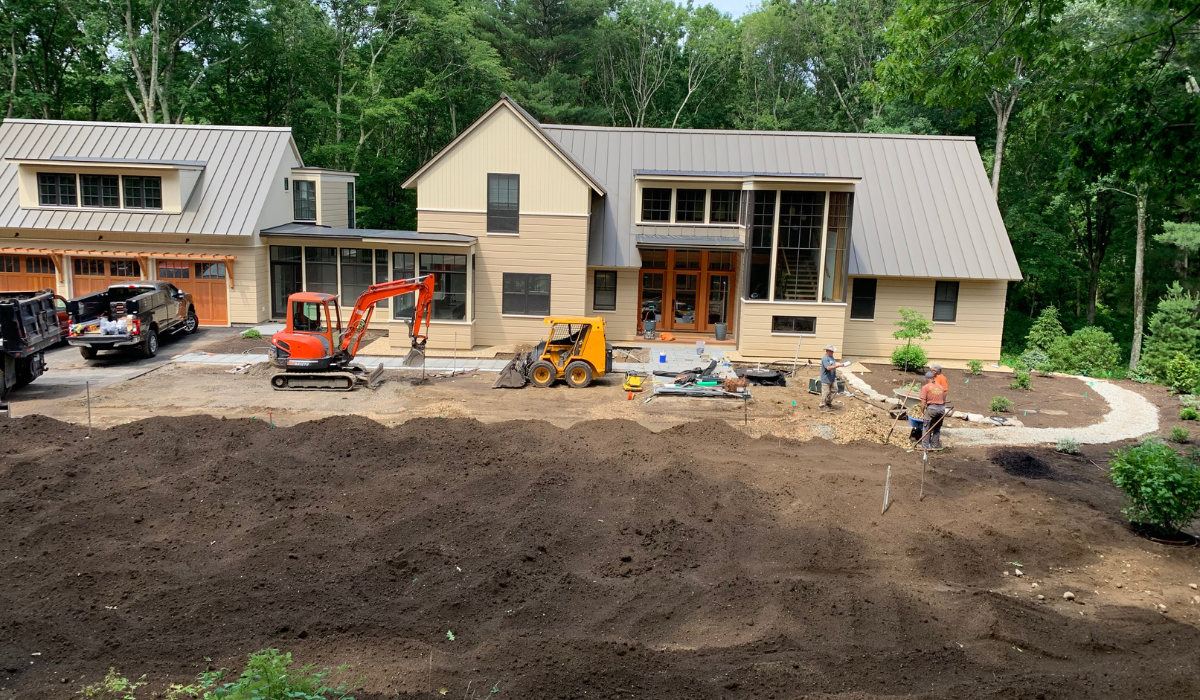
Why Homeowners Are Rethinking the American Lawn
For generations, the lush, perfectly manicured green lawn has been a symbol of the American dream. But in recent years, homeowners across Newton, Wellesley, Westwood, Needham, Walpole, and the Greater Boston area have started asking a different question: Is all that mowing, watering, and fertilizing really worth it?
Concerns about water usage, biodiversity loss, and the environmental costs of lawn maintenance are pushing people to look for alternatives that are beautiful, functional, and sustainable. One of the most exciting solutions gaining traction is the tapestry lawn — a vibrant, low-maintenance, eco-friendly ground cover that trades monoculture grass for a living mosaic of diverse plants.
At Land Design Associates, we’ve helped homeowners design and install tapestry lawns that are every bit as inviting as traditional turf — but with far less upkeep and far greater ecological benefits.
What Is a Tapestry Lawn?
A tapestry lawn is a densely planted mix of low-growing, small-leafed plants that together form a continuous groundcover. Unlike traditional lawns, which are made up almost entirely of a single grass species, tapestry lawns are multi-species ecosystems that can include:
Flowering groundcovers
Low-growing herbs
Clover
Mosses
Compact perennials
These plants are chosen not only for their beauty but for their hardiness and low maintenance needs. The result is a carpet-like expanse that shifts in color and texture throughout the seasons, attracts pollinators, and requires far less water, fertilizer, and mowing than turfgrass.
In other words: instead of one plant doing all the work, you have a diverse team of plants creating a self-sustaining, resilient lawn.
Why Greater Boston Homeowners Are Switching to Tapestry Lawns
1. Dramatically Lower Maintenance
Traditional lawns demand constant mowing and edging. Tapestry lawns require very little mowing — and some plant mixes can go without mowing entirely. That means:
Less time spent on yard work
Lower fuel or electricity usage
Reduced equipment costs
2. Drought Tolerance
Summers in Massachusetts are becoming hotter and drier. Many tapestry lawn plants are naturally drought-resistant, requiring little supplemental water once established.
3. Pollinator & Wildlife Benefits
By introducing flowering plants like creeping thyme or clover, you create habitat for bees, butterflies, and other beneficial insects. This strengthens the local ecosystem and supports biodiversity right in your backyard.
4. No Chemicals Needed
Because these plants are adapted to local growing conditions, there’s no need for synthetic fertilizers or pesticides. That means:
No runoff pollution into local waterways
Healthier soil biology
Safer play areas for kids and pets
5. Beauty Beyond Green
Tapestry lawns change with the seasons — think purple thyme blooms in June, white clover flowers in July, bronze ajuga leaves in autumn. The variety of textures and colors creates visual depth that turfgrass can’t match.
The Best Plants for Tapestry Lawns in New England
Designing a tapestry lawn in Zone 6b (Greater Boston) means choosing plants that can handle:
Cold winters with freeze-thaw cycles
Humid summers
Variable rainfall
Some of our top picks at Land Design Associates include:
Creeping Thyme (Thymus serpyllum)
Fragrant, drought-tolerant, purple flowers in early summer
Handles light foot traffic
White Dutch Clover (Trifolium repens)
Nitrogen-fixing, supports pollinators, soft underfoot
Extremely hardy
Blue Star Creeper (Isotoma fluviatilis)
Tiny blue blooms spring–fall, fills gaps quickly
Ajuga (Ajuga reptans)
Rich purple foliage, thrives in shade
Roman Chamomile (Chamaemelum nobile)
Aromatic, soft texture, edible flowers
Sedum (various species)
Thrives in sunny, dry spots
Mosses
Ideal for shady, damp areas where grass struggles
When combined strategically, these plants create a layered living quilt that thrives with minimal intervention.
How Land Design Associates Creates Your Tapestry Lawn
We don’t believe in one-size-fits-all landscapes. Every tapestry lawn we install is designed for the specific conditions and lifestyle of the property owner. Our process looks like this:
Step 1: Site Evaluation & Design
We visit your property to:
Assess sunlight and shade patterns
Test soil structure and drainage
Understand your maintenance preferences and goals
Then we design a plant palette tailored to your site.
Step 2: Removing Existing Turf
We use eco-friendly turf removal methods like:
Sheet mulching (smothering grass with cardboard and compost)
Solarization (using clear plastic to harness the sun’s heat)
Manual sod-cutting for fast results
Step 3: Soil Preparation
Healthy soil is the foundation of a thriving tapestry lawn. We loosen compacted soil, add organic compost, and avoid chemicals that disrupt beneficial microbes.
Step 4: Installation
Depending on your goals and budget, we can:
Plug plant individual species in a planned pattern
Sow seed mixes for larger areas
Install pre-grown tapestry mats for instant coverage
Step 5: Establishment Period Care
For the first 4–6 weeks, we provide guidance on watering and weed control to help your plants root and spread.
Step 6: Minimal Long-Term Maintenance
Once established, your tapestry lawn will:
Need water only during severe droughts
Rarely require mowing
Thrive without fertilizers or pesticides
Customizing Your Tapestry Lawn for Function & Style
We can design your tapestry lawn to be:
Pollinator-friendly – Selecting nectar-rich blooms that flower in succession
Edible – Including herbs like chamomile, thyme, and oregano
Traffic-tolerant – Using species that handle kids, pets, and foot traffic
Seasonally dynamic – Ensuring color and texture changes throughout the year
We also often integrate:
Stepping stone pathways to guide movement
Rain gardens to capture stormwater
Native plant borders for ecological value
Environmental Benefits of Tapestry Lawns
Compared to turfgrass, tapestry lawns:
Reduce water use by up to 75%
Eliminate chemical runoff
Increase carbon sequestration in the soil
Support local pollinators and beneficial insects
Reduce mower emissions
Is a Tapestry Lawn Right for You?
It might be the perfect choice if you:
Want a low-maintenance, eco-friendly lawn
Appreciate a natural, organic aesthetic
Want to attract pollinators and support biodiversity
Don’t mind waiting a season or two for full coverage
It might not be ideal if you:
Need a uniform play lawn for sports
Live in a neighborhood with strict HOA rules requiring turfgrass
Why Choose Land Design Associates for Your Tapestry Lawn
While the concept of a tapestry lawn is simple, the execution matters. Choosing the wrong plant mix or skipping soil prep can lead to patchy coverage, weed invasion, or poor long-term performance.
At Land Design Associates, our expertise ensures that:
Your plant palette is matched to your microclimate
Installation methods maximize plant health and coverage
The design integrates seamlessly with your home and landscape