
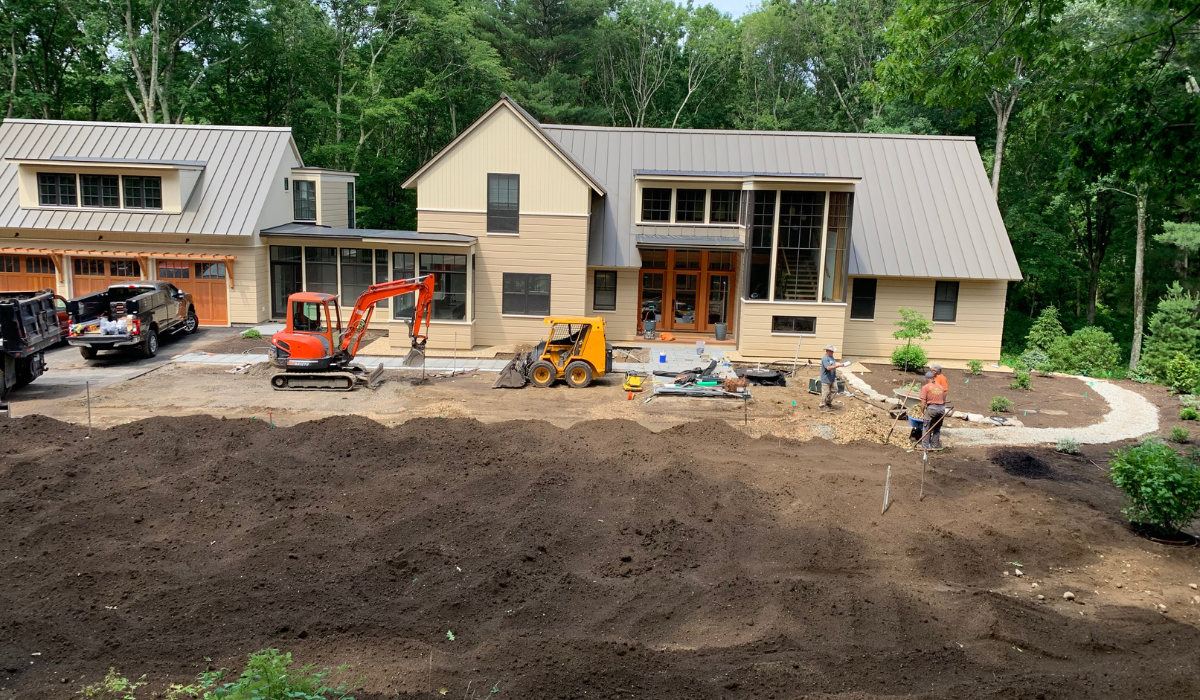
Regenerative landscape design and implementation is a core concept for The Garden Continuum. We aim to improve the health of the soil and local ecosystem through the design and implementation of landscapes that delight and inspire. We strive to offer benefits like increased biodiversity and water filtration along with improving pollinator habitat. However, building these landscapes can be complex, as it requires careful consideration of factors like native plant selection, soil building practices, and minimal disruption to the existing environment.
Challenges of Collaborative Construction
Access and scheduling – Minimizing impact on the land during construction requires meticulous planning for access, scheduling, and resource management. Coordinating with all contractors beforehand to establish designated vehicle access routes, parking zones, and material staging areas helps limit unnecessary disturbances to the natural environment. This can sometimes feel inconvenient for contractors and clients but is essential for protecting the land from undo compaction and damage.
Project Management – Furthermore, a central point of contact, such as a project manager, is crucial for smooth workflow. This designated individual ensures clear communication and contractor collaboration, fostering seamless transitions and preventing scheduling conflicts between trade professionals. By working together and planning these aspects thoroughly, construction can proceed efficiently while respecting the integrity of the surrounding landscape. Your project manager should have intimate knowledge of the design intent, the project nuances, the client’s goals, and the contractor’s needs. Their work requires participation from the start to the end of the project development.
Respect for the industry and contractor alignment – When it comes to regenerative landscape projects, the goal is to work in alignment with natural systems while understanding the specifics of the project site. This requires respecting an often misunderstood industry while aligning with the lead contractor and their unique subcontractors. Collaboration is critical, especially when working with those unfamiliar with these practices. Starting with the clients, we, as designers, project managers, and lead contractors, want to ensure they are briefed on all participants in the construction process. This includes sharing schedules, names and scope of work, and the details of the chain of command. A surefire way to undermine a project is to put too many cooks in the kitchen, to coin a common restaurant adage. Clearly outline the strategy for decision-making, both on-site and off. Barring an emergent situation, avoid pushing through changes without the project manager’s and/or designer’s approval.
Bridging the gap between traditional and regenerative practices – Aligning the often fast-paced conventional construction methods with the more nuanced approach of regenerative landscaping can be challenging. However, client and contractor education can significantly reduce those challenges. By fostering a collaborative spirit, explaining regenerative principles, and clearly articulating how decisions are made, project managers can empower contractors to embrace new techniques while giving the clients confidence in their team. This approach ensures successful project outcomes and paves the way for a future where respect for the industry and regenerative practices go hand-in-hand.
Challenges Specific to Regenerative Practices
Timing and change orders – Due to the dynamic nature of all projects, surprises can arise. Unexpected discoveries during construction, like hidden underground features (like ledge or stumps) or fluctuations in native plant and material availability, might necessitate on-the-fly adjustments. Open communication with clients throughout the process is crucial. By keeping them informed of potential changes and the rationale behind them, project managers can manage expectations and minimize the need for disruptive change orders. Respecting the client’s decision-making process is paramount. Rushing through adjustments to meet unrealistic deadlines can compromise the project’s integrity. Instead, encouraging an environment where all parties have a voice ensures the project unfolds smoothly, with the client feeling involved and the regenerative vision intact.
Unforeseen circumstances and construction creep – The Garden Continuum acknowledges that surprises are inevitable during construction, and even minor additions, often called “construction creep,” can snowball and impact budgets and timelines. To combat this, we take a proactive approach that strives to minimize construction creep through meticulous pre-planning and clear client communication at the project’s onset. This can mean it takes longer to complete a design or finalize a project contract, but it also limits change orders and unforeseen additions to the budget. This proactive approach ensures that all parties know potential challenges before construction and are prepared to address them efficiently, allowing the project to stay on track and within budget.


